
Last year, we ran through seven real-world examples of AI being used for social good, from a sexual health chatbot in East London to a flood forecasting model spanning dozens of countries. Since then, the sector’s had no shortage of headlines. The India AI Impact Summit in New Delh, the latest UNESCO AI ethics conference and the workshops at NeurIPS and IJCAI. Plenty of stages, plenty of panels.
But summits don’t change things on their own. So this update skips the conference circuit. Here’s what’s actually changed for the people these tools were built for.
Cutting wildlife survey time from months to days
A study led by Washington State University and Google, published this year in the Journal of Applied Ecology, tested a fully automated AI model called SpeciesNet. It processed camera-trap images from conservation sites in Washington, Montana’s Glacier National Park, and Guatemala’s Maya Biosphere Reserve, with no human review at all. The results still broadly matched the scientific conclusions from expert-labelled datasets, aligning in roughly 85 to 90% of cases. Work that used to take six to seven months, sometimes up to a year, can now be done in days. For under-resourced conservation teams tracking species that’s the difference between reacting to a population decline next year and catching it in time to act.
The adoption-impact gap is real, and worth naming
Before the good news, a bit of context. A benchmark study of 346 charities published this year found that 92% of large charities are now using AI in some form, up from single digits two years ago. But only 7% describe their use as strategic. That means it’s delivering measurable ROI and mission impact. A separate survey of 75 charities found much the same story. 45% measure success mainly by time saved. Only 19% can point to genuinely measurable results.
That gap matters. It’s the difference between “we bought a chatbot” and “we changed an outcome for someone.” The projects below sit firmly on the right side of that line. Each has published numbers behind it, not just a press release.
Flood forecasting now reaches 700 million people
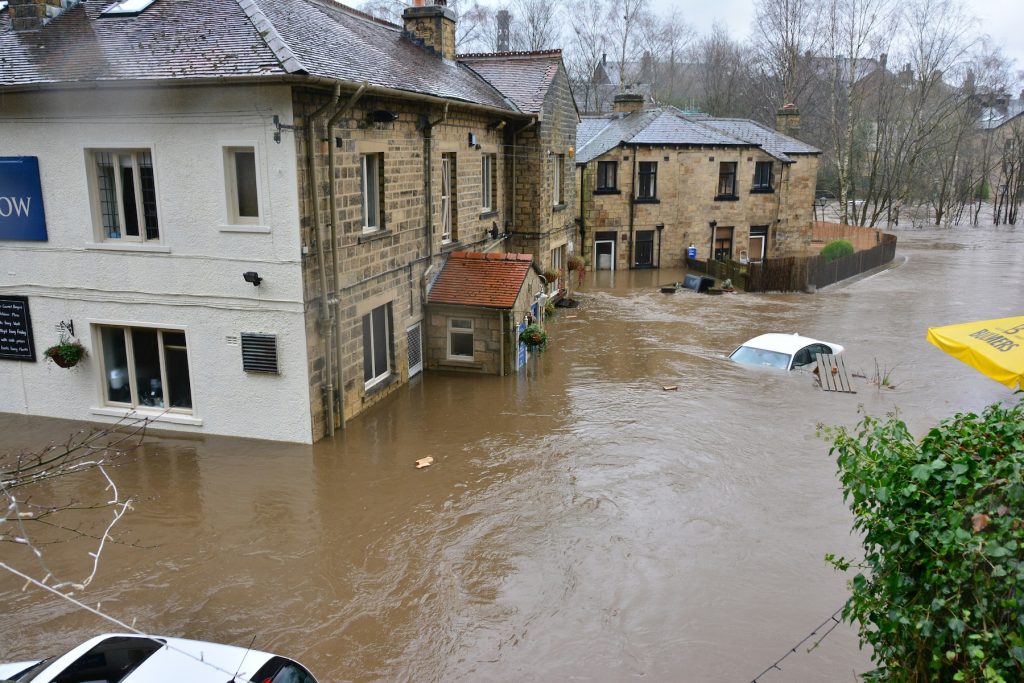
We covered Google’s AI-driven flood forecasting model in that original post, when it had expanded to around 80 countries and 460 million people. It’s grown fast in the year since. The platform, Flood Hub, now provides seven-day-ahead riverine flood forecasts across more than 100 countries, reaching roughly 700 million people. That jump is possible thanks to LSTM-based machine learning models that can predict flooding even in watersheds with no local streamflow data. That’s a problem that has historically locked lower-income countries out of reliable early warning systems.
In April this year, Google Research extended the same approach to flash flooding, which is responsible for around 85% of flood-related deaths worldwide. It rolled out urban flash flood forecasts across 150 countries. Even a 12-hour warning can cut flood damage by 60%, and less than half of developing countries currently have access to multi-hazard early warning systems at all. This is one of the clearer examples of AI closing a genuine equity gap rather than widening one.
Signpost: 20 million registered users, half a million consultations
The International Rescue Committee’s Signpost platform started as a small digital help desk during the Syrian refugee crisis. It has now registered more than 20 million users across nearly 30 countries and 25+ languages, and has supported over 500,000 digital social work consultations.
What’s notable is how deliberately the IRC has scoped its use of chatbot technology, something we’ve watched evolve for years. Rather than bolting on a generic chatbot, the team builds purpose-designed AI agents with defined knowledge boundaries and escalation paths to human staff, tested extensively before launch. A pilot in Mexico earlier this year was designed to help the service reach ten times more people, with response times 99% faster. Sensitive questions are still routed to a human only. In Cox’s Bazar, Bangladesh, a local version called InfoSheba has helped displaced people navigate lost paperwork and disrupted aid access. Meanwhile aprendIA, an AI-supported teacher-training tool also built on the same platform, has grown from around 500 teachers to more than 4,700, with a target of 22,000 by the end of 2026. Designed to help educators provide education and emotional support to children living in resource-constrained, conflict-affected, or disaster-prone regions.
Climate TRACE: from 352 million to 744 million tracked assets
WattTime and the Climate TRACE coalition, which we mentioned in that original post for identifying over 352 million emission sources, have kept scaling. The coalition now draws on more than 300 satellites and 11,000+ sensors to track upwards of 2.7 million individual emissions sources, summarised from more than 744 million underlying assets. It’s also been releasing monthly, rather than annual, global emissions data since 2025. Which turns a slow-moving dataset into something policymakers and businesses can actually act on in near real time.
The open-weight boom, and the gap it's meant to close
Microsoft’s latest Global AI Diffusion Report, published this September, shows worldwide AI usage climbing to 18.8% of the working-age population. But the gap between the Global North and Global South is still widening, with usage at 28.8% and 16.2% respectively. The report points to open-weight models as one of the more promising ways to narrow that gap. They can be run more cheaply and adapted to local languages and needs without relying on an expensive proprietary tool, something we’ve looked at in more depth when comparing the sustainability trade-offs of different open-weight model families. That makes them increasingly the route by which AI actually reaches lower-income regions rather than bypassing them. It’s not a solved problem yet, but it’s a trend worth watching for anyone concerned that AI’s benefits are landing unevenly.

Funding is starting to back sustainability, not just capability
It’s not all deployed products. Some of this year’s progress is in the funding pipeline. UK Research and Innovation opened a £12.05 million call in August for “Transformative Sustainable AI Technologies”. It offers grants of up to £602,500 for speculative, high-risk research aimed at cutting the energy, water, and material footprint of future AI systems. It’s a reminder that “AI for good” isn’t only about applying AI to social problems. It’s also about making the technology itself less environmentally costly to run, an issue we’ve covered before and one that gets far less attention than the flashier use cases.
Where this leaves anyone thinking about their own project
If your organisation is weighing up where AI could genuinely help, that thinking has to happen before any code gets written. A Tech Roadmap Workshop turns a rough idea into a scoped, costed plan, whether that leads into MVP Development or, if you’re already moving from proof of concept to a live product, straight into Support Retainers to keep what you’ve built running.


